By the time a child blows out five candles on a birthday cake, roughly 90% of their brain has already been built. Not "influenced." Not "shaped." Built — the physical architecture of neural connections that will underlie learning, behaviour, and health for the rest of their life is largely in place before kindergarten even starts. That single fact is why the first five years get so much attention from researchers, economists, and paediatricians — and why the choices Calgary parents make about early care and education carry more weight than most people realize.
The Brain-Building Years
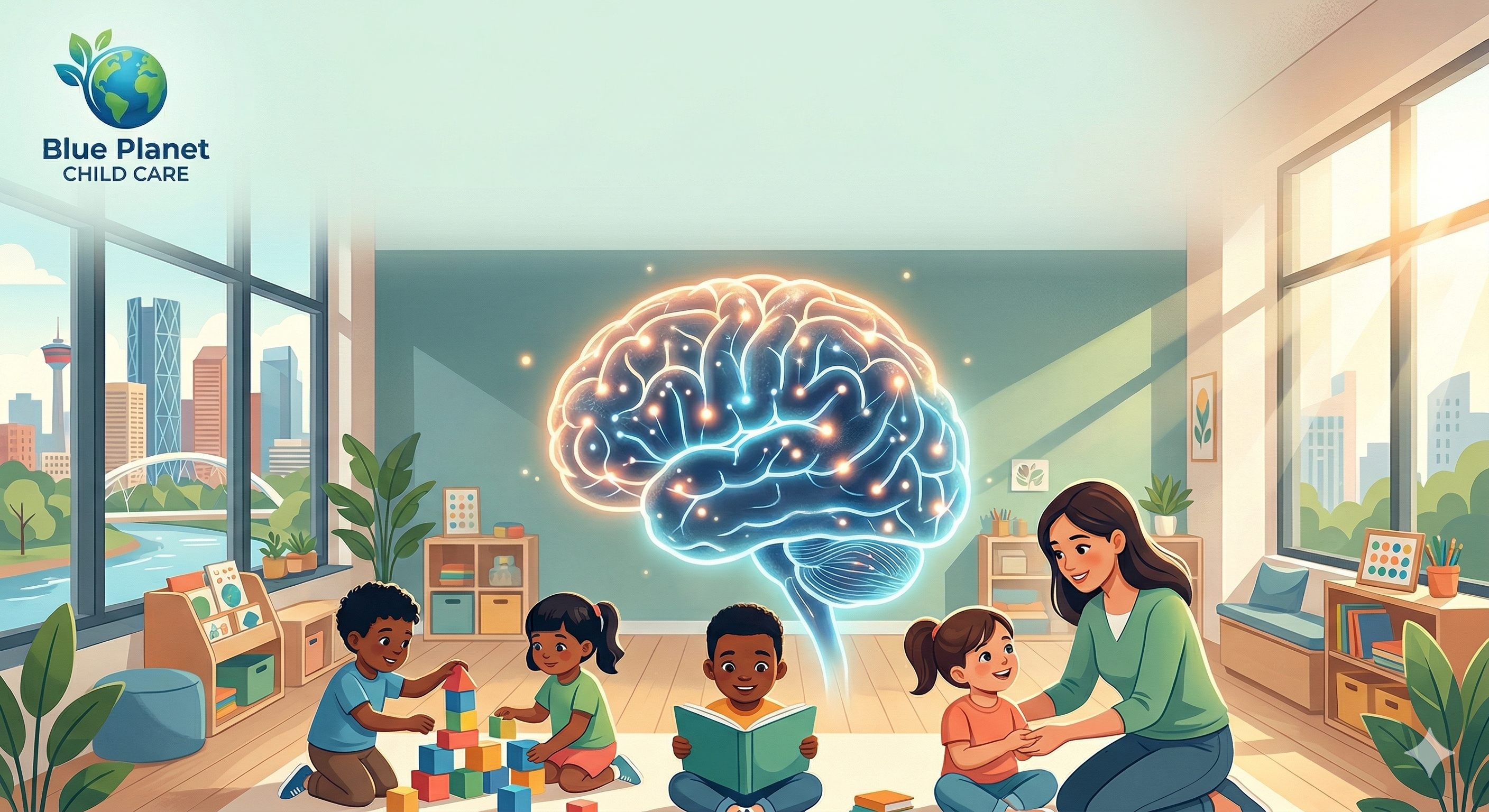
According to Harvard University's Center on the Developing Child, a young child's brain forms more than one million new neural connections every second in the earliest years of life — a pace never repeated again. This rapid construction is driven by "serve and return" interactions: when a child babbles, gestures, or cries, and an attentive adult responds, that back-and-forth literally builds brain circuitry. Consistent, responsive relationships in these years are not just emotionally nice — they are the mechanism by which healthy brain architecture gets built in the first place.
The flip side matters too. Chronic, unbuffered stress in early childhood — what researchers call "toxic stress" — can disrupt this developing architecture and make later learning and self-regulation harder. A stable, warm, predictable environment isn't a luxury during this window; it's protective.
The Economics of Early Childhood
Nobel laureate economist James Heckman has spent decades studying the return on investment of early childhood programs. His research — often summarized as the "Heckman Curve" — found that investment in high-quality early childhood development delivers a higher economic return than investment at any later stage of a person's life, through better outcomes in education, health, and employment down the road. The core insight is simple: skills beget skills. A child who develops strong social, emotional, and cognitive foundations early finds it easier to build on them at every stage that follows.
This is precisely why Alberta's $15-a-day childcare program exists: making high-quality early learning accessible isn't just a family-budget question, it's recognized as one of the highest-leverage public investments available.
What "Quality" Actually Looks Like Day to Day
Research is consistent that the benefits of early childhood education depend heavily on quality — not just enrollment. In practice, quality looks like small enough groups for genuine individual attention, educators trained in child development, and a program that treats each stage of early childhood as developmentally distinct rather than a one-size-fits-all holding pattern. That's the standard we hold ourselves to at Blue Planet Child Care, and it's why our programs are built stage by stage rather than as a single undifferentiated "daycare" experience:
- Toddler Group (19 months–3 years): the attachment-driven foundation years, when the relationship between a child and their educator is the prerequisite for everything else.
- Preschooler Group (3–4 years): rapidly expanding language, peer interaction, and movement-integrated learning.
- Junior Kindergarten (4–5 years): sustained inquiry, early literacy and numeracy, and school-readiness skills — particularly relevant in Calgary, where the CBE does not offer a public JK option.
We go deeper into what happens at each of these stages in From Toddler to Junior Kindergarten: What Your Child Learns at Each Stage, and into why movement specifically matters so much for young brains in Minds in Motion: The Science and Vision of Movement-Based Education.
What This Means for Calgary Parents
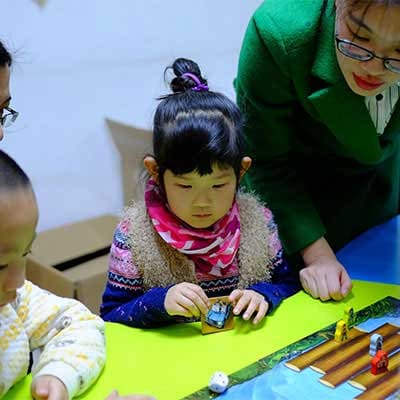
You don't need to become a neuroscientist to act on this research. The practical takeaway is straightforward: the years between 19 months and 5 years are worth being deliberate about. That means looking past marketing language and asking real questions when you tour a program — about group sizes, educator training, and how a curious three-year-old's day is actually structured, not just how it's described on a website.
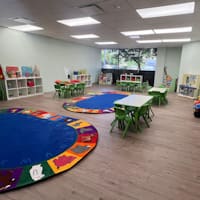
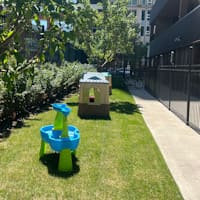
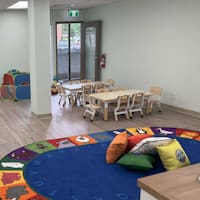
At Blue Planet Child Care in Downtown Calgary (Beltline / Victoria Park), we built our programs around exactly this research — and we're always glad to walk a family through what a day here actually looks like. See our full tuition and fees, check our FAQ for common registration questions, or book a tour to see it for yourself.
Sources & Further Reading:
- Center on the Developing Child, Harvard University. Brain Architecture & Serve and Return. developingchild.harvard.edu
- Heckman, J. J. The Heckman Equation: Invest in Early Childhood Development. heckmanequation.org
- Shonkoff, J. P., & Phillips, D. A. (Eds.). (2000). From Neurons to Neighborhoods: The Science of Early Childhood Development. National Academies Press.
- Center on the Developing Child, Harvard University. Toxic Stress. developingchild.harvard.edu